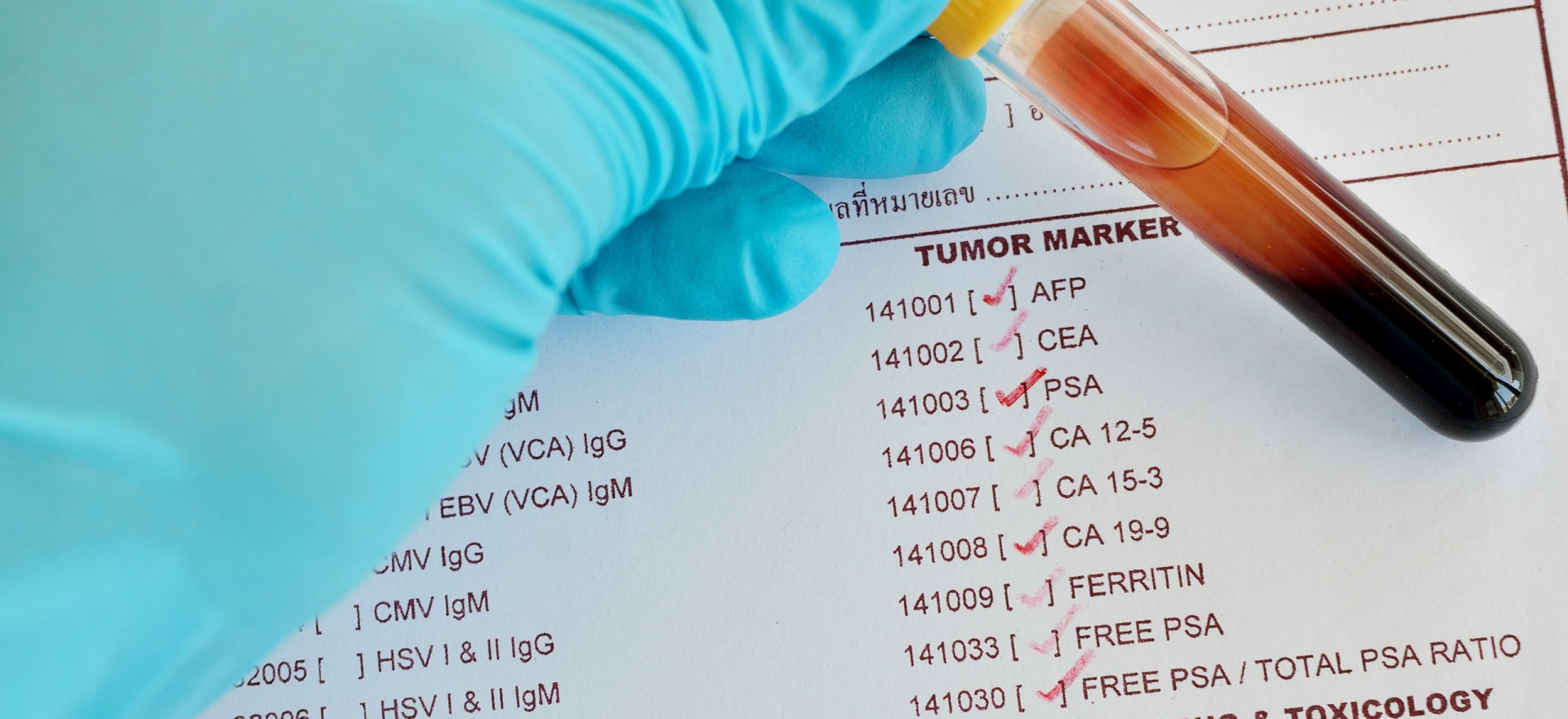
Анализ на онкомаркеры
Анализ на онкомаркеры — это лабораторное исследование, направленное на выявление в крови, моче или других биологических жидкостях специфических веществ, которые могут указывать на наличие злокачественных опухолей. Эти вещества (онкомаркеры) выделяются как самим опухолевым процессом, так и нормальными клетками организма в ответ на развитие опухоли.
Основные онкомаркеры и их значение
- CEA (карциноэмбриональный антиген): используется для диагностики рака толстой кишки, прямой кишки, легких, груди и других опухолей. Повышение уровня может также наблюдаться при воспалительных заболеваниях.
- AFP (альфа-фетопротеин): показатель рака печени (гепатоцеллюлярной карциномы) и опухолей яичников или яичек. Может быть повышен при хроническом гепатите и циррозе.
- CA-125: основной маркер рака яичников. Используется для контроля лечения и раннего выявления рецидивов.
- CA 15-3 и CA 27-29: применяются при мониторинге рака молочной железы. Уровень может повышаться также при доброкачественных заболеваниях.
- PSA (простатспецифический антиген): специфичный для рака предстательной железы. Используется для диагностики и мониторинга заболевания.
- HCG (хорионический гонадотропин человека): показатель трофобластических опухолей и некоторых форм рака яичников или яичек.
- SCC (сквамозноклеточный антиген): используется для диагностики рака шейки матки и головы и шеи.
- CYFRA 21-1: применяется для выявления немелкоклеточного рака легких.
- BRCA1/BRCA2 (генетический тест): выявление предрасположенности к раку молочной железы и яичников.
- Thyroglobulin: используется для мониторинга рака щитовидной железы.
Показания для анализа на онкомаркеры
- Подозрение на злокачественное новообразование.
- Мониторинг эффективности лечения.
- Выявление рецидива или метастазов.
- Скрининг у пациентов с генетической предрасположенностью.
- Дифференциальная диагностика доброкачественных и злокачественных процессов.
Как проводится анализ
- Подготовка. Исследование проводится натощак. За 24 часа до анализа рекомендуется исключить жирную пищу, алкоголь и физические нагрузки. Перед сдачей PSA требуется воздержание от половых актов.
- Забор материала. Чаще всего анализ проводится на венозной крови. В некоторых случаях используются моча или биопсийный материал.
- Результаты. Готовность результатов зависит от лаборатории (1–7 дней). Интерпретация требует консультации врача, так как онкомаркеры могут повышаться при доброкачественных заболеваниях или воспалительных процессах.
Ограничения анализа
- Не является самостоятельным методом диагностики. Повышение онкомаркеров не всегда свидетельствует о наличии опухоли. Диагноз ставится только на основе комплексного обследования (КТ, МРТ, биопсия).
- Ложноположительные результаты. Повышение онкомаркеров может быть связано с воспалением, инфекцией, стрессом.
- Ложный отрицательный результат. На ранних стадиях рака онкомаркеры могут быть в пределах нормы.
Анализ на онкомаркеры в Беларуси — это важный вспомогательный инструмент в диагностике и мониторинге онкологических заболеваний. Однако результаты анализа всегда должны интерпретироваться врачом в контексте клинической картины и других методов обследования.
This text has been translated using machine translation technology (DeepL API) and may contain inaccuracies.
Clinics
This service is provided by:

Гродно
Grodno University Clinic

Витебск