
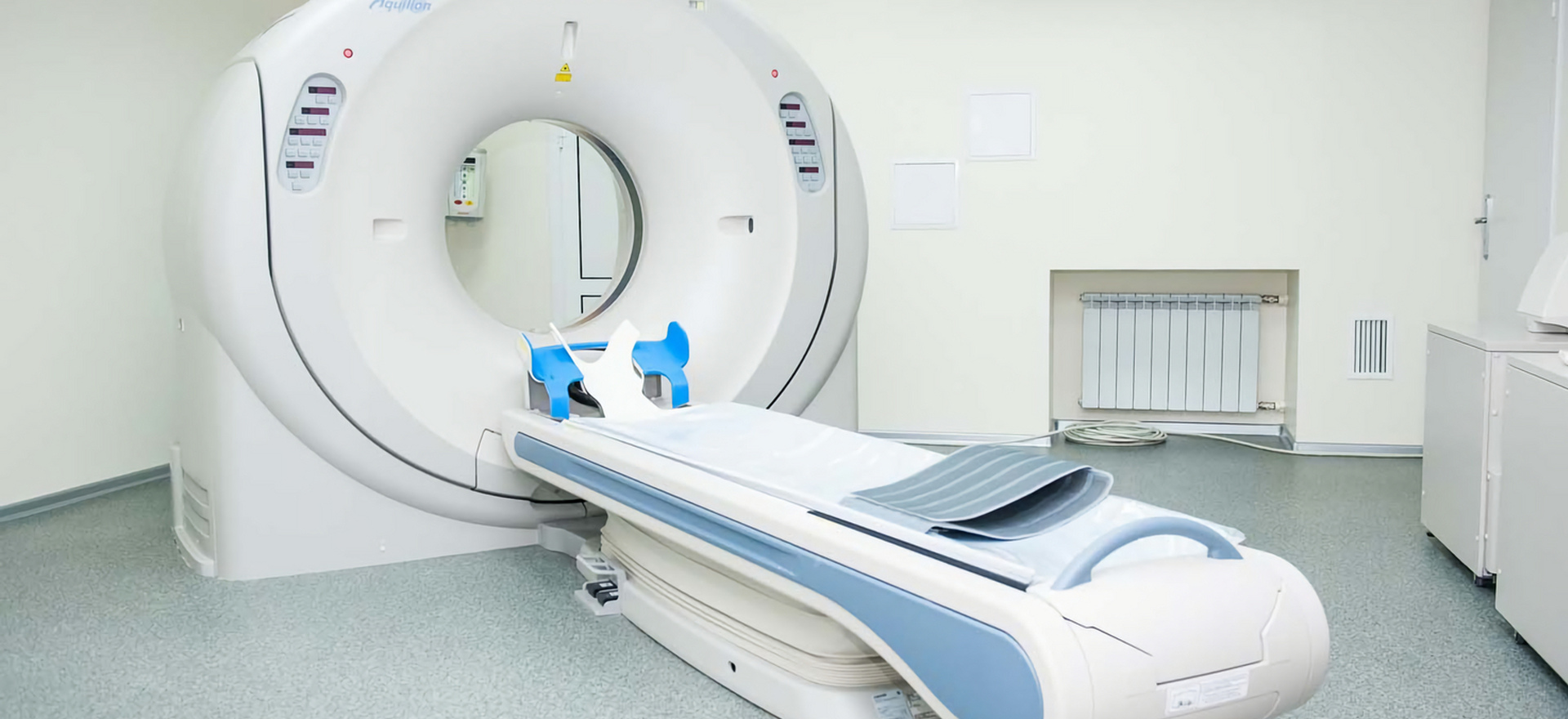
КТ-денситометрия – это высокоточный метод диагностики плотности костной ткани, позволяющий выявить остеопороз, оценить риск переломов и эффективность лечения. Исследование проводится с использованием низкодозового рентгеновского излучения.
Когда требуется КТ-денситометрия?
При подозрении на остеопороз, особенно у женщин в постменопаузе. В случаях частых переломов, болей в костях, снижения роста. Для контроля плотности костей при длительном приёме гормональных препаратов, заболеваниях щитовидной железы, почек. При оценке эффективности терапии остеопороза.
Как проходит исследование?
Пациент располагается в компьютерном томографе, где выполняется сканирование поясничного отдела позвоночника, шейки бедра или всего скелета. Исследование занимает 10–20 минут, безболезненно и требует минимальной подготовки.
Основные преимущества КТ-денситометрии в Беларуси
Высокая точность оценки минеральной плотности костей. Возможность выявления остеопороза на ранних стадиях. Быстрота процедуры, минимальная лучевая нагрузка.
Белорусские медицинские центры оснащены современными низкодозовыми КТ-аппаратами, обеспечивающими точную диагностику плотности костной ткани. Опытные специалисты проводят обследование с детальной интерпретацией результатов.